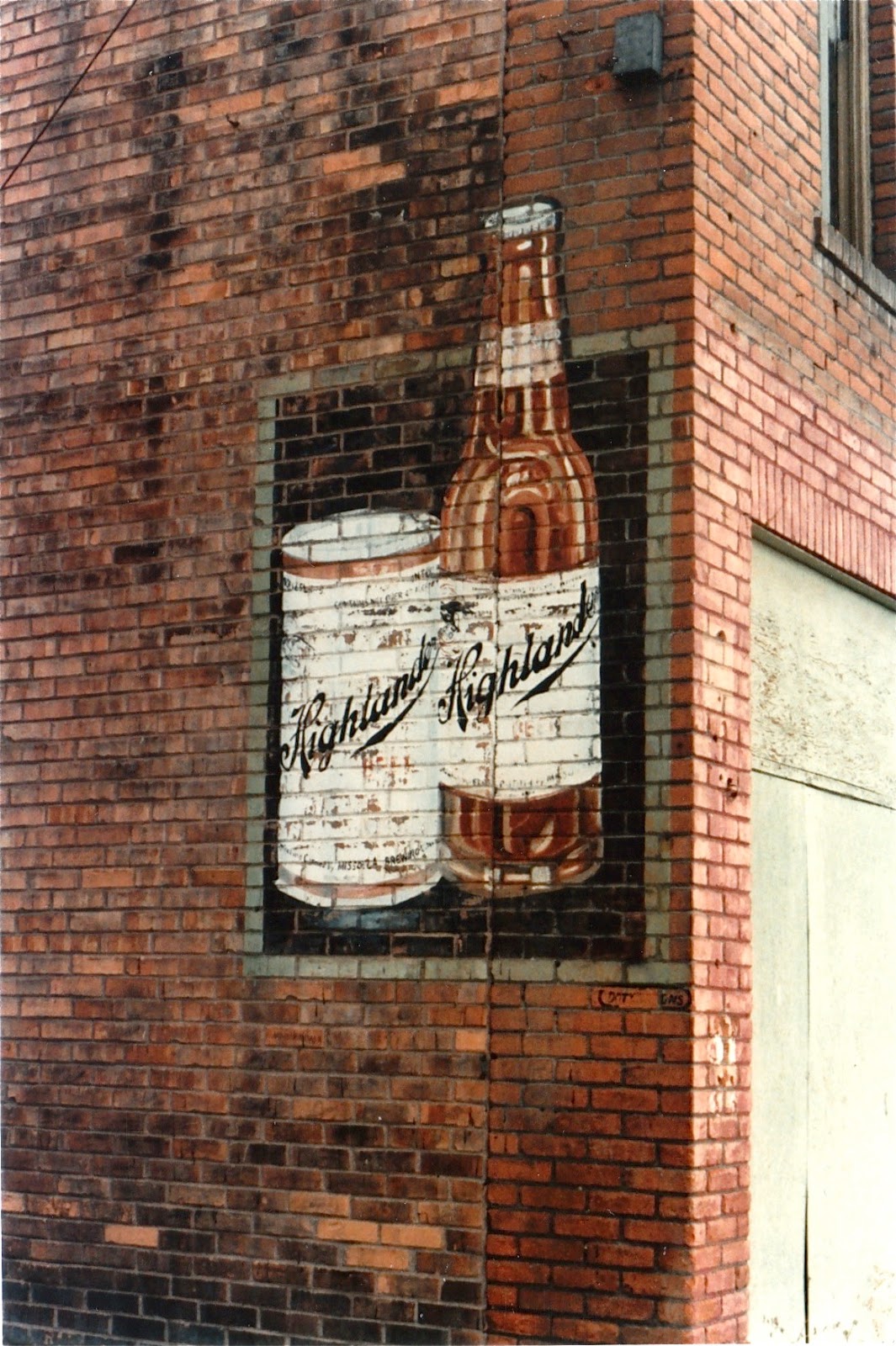
Keep It Rock Steady, Man


It's early March of 1983, a couple days after a late winter storm tore through eastern Montana. Not dumping very much linear inches of snow, but accompanied by forty to fifty mile an hour winds that kicked up what had fallen and blowing it sideways at high velocity, the resulting high plains ground blizzard created a howling and shrieking frozen hell on earth where no beast or sane man would willingly spend more than a few minutes out in a 50 to 70 wind-chilled degrees below zero world where you can't see anything past the end of your outstretched arm, and millions of tiny razor sharp exploding ice bombs try to scour off any exposed flesh from your face.

That's a long sentence, and so are the hours spent in enforced lay-over at a funky motel in west Billings when the Interstate highway gets shut down until it can be plowed open the next morning. Luckily we were able to score some yummy and nutritious take-out road food, and beer, and enjoyed watching any one of three available channels on the tiny TV in the room:


On this particular road trip, "we" is me, your humble blog servant, and Charles "Beaver" Cavanaugh - a more engaging and continually entertaining trip companion you would be hard pressed to find. Never a dull moment with The Beav. Here's a photo from 1983 of both Beaver and I, plus some other denizens of the Colorado music scene in the early 1980s:


From left to right, that's Tom "T-Bone Thomas" Jurkens; me, the author of this blog; Charles "Beaver"  Cavanaugh; Fabrice "Fab" Dolegowski; and Clark Hardin. For more details, see here.

Now back to that road trip. The next morning dawned clear and cold yet sunny, and the Interstate was opened a couple hours before noon; time to hit the road.


That might look like pavement on the highway, but it's all traction-free black glare ice with a thin sheen of sun-melted water on top, so treacherously slimy and devoid of adhesion, that if you pulled over and got out of the car, you'd either immediately start skating or quickly fall flat on your face or butt, your choice. Those 18-wheeler trucks in the right lane are going at a relatively safe, but still insane, 50 to 55mph or so. But our big 1971 Lincoln Continental Mark III was sledding down that slippery road a lot faster and insaner than that, easily overtaking and passing everyone else.

I was messing with the camera and taking pictures out of sheer panic, anything to keep my mind off certain death. That massive and heavy rear wheel drive Lincoln, only 12 years old at the time but already seeming like a living fossil from another era, was doing a slow motion controlled fishtail down the highway, the rear end constantly twitching left and right as Beaver made minute corrections of the steering wheel every second or so, and somehow almost miraculously keeping the front wheels in the center of the fast lane at 70+ miles per.

I said, "Whoa Beaver, that is some conscious driving, dude. Can't believe we're still on the road!" He laughed and said "All you got to do is keep it rock steady, man!" and then, "Hey Jimmy, roll us a big fat spliff, it'll help me concentrate!" Well, okay, that would give me something to do besides have a heart attack. And yeah, the smoke did help, and also some zen breathing - letting go and resigning myself to the fates, whatever happens.


As it happened, nothing happened. Somewhere past Big Timber we hit dry pavement and, Montana not having a speed limit, really goosed that big 460ci with a carb the size of a dinner plate, and rolled into Missoula in good time.

The weather stayed mostly sunny and even warmed up, and we had some adventures before heading back to Boulder. Including driving by pure chance into Butte for gas and magically wound up riding in a big green top-down '60s Cadillac convertible in the middle of the St Patrick's Day parade, Beaver Cavanaugh got unofficially crowned the new King of the Irish, and we got free drinks all night long at every bar and saloon downtown until dawn, and then drove out of town, excuse the expression, drunk as a couple of Irishmen.

Truly an unforgettable night. When we woke up in the middle of a sagebrush flat a hundred miles out of town, in a valley surrounded by gigantic snow covered mountains with not another soul or a car or a house or a horse in sight, I asked, "What just happened?" Beaver said, "I don't remember."

You'll have to take my word for that last story; the battery died in my camera, or it ran out of film, I don't remember.


Speaking of photographs, all of the pictures in this blog post are scans of old prints. Some years ago I lost a sizable box of photo prints, negatives and slides; thankfully the box was found. The bad news is many of the pictures were missing, as well as a lot of the negatives; the good news is I still have at least some of them.

*               *               *

A few months later during the summer, we took another road trip up to Montana, this time with I-Ron, the lead singer of Beaver's reggae and rocker band, Burnt Lips. First, we stopped and visited John, whose family had a farm near Idaho Falls, between Rigby and Ririe. At the time, John was building a sawmill, and doing an amazing thing - kayaking down an irrigation ditch at full flow, the entire length of the farm:


Beaver held the kayak steady while I-Ron got in for his turn down the chute:


After a while we made it to Missoula:


It was a beautiful warm and sunny Montana summer day, perfect for relaxing on the grassy lawn at the homestead of another of Beaver's friends, up on the Potomac River valley east of Missoula:
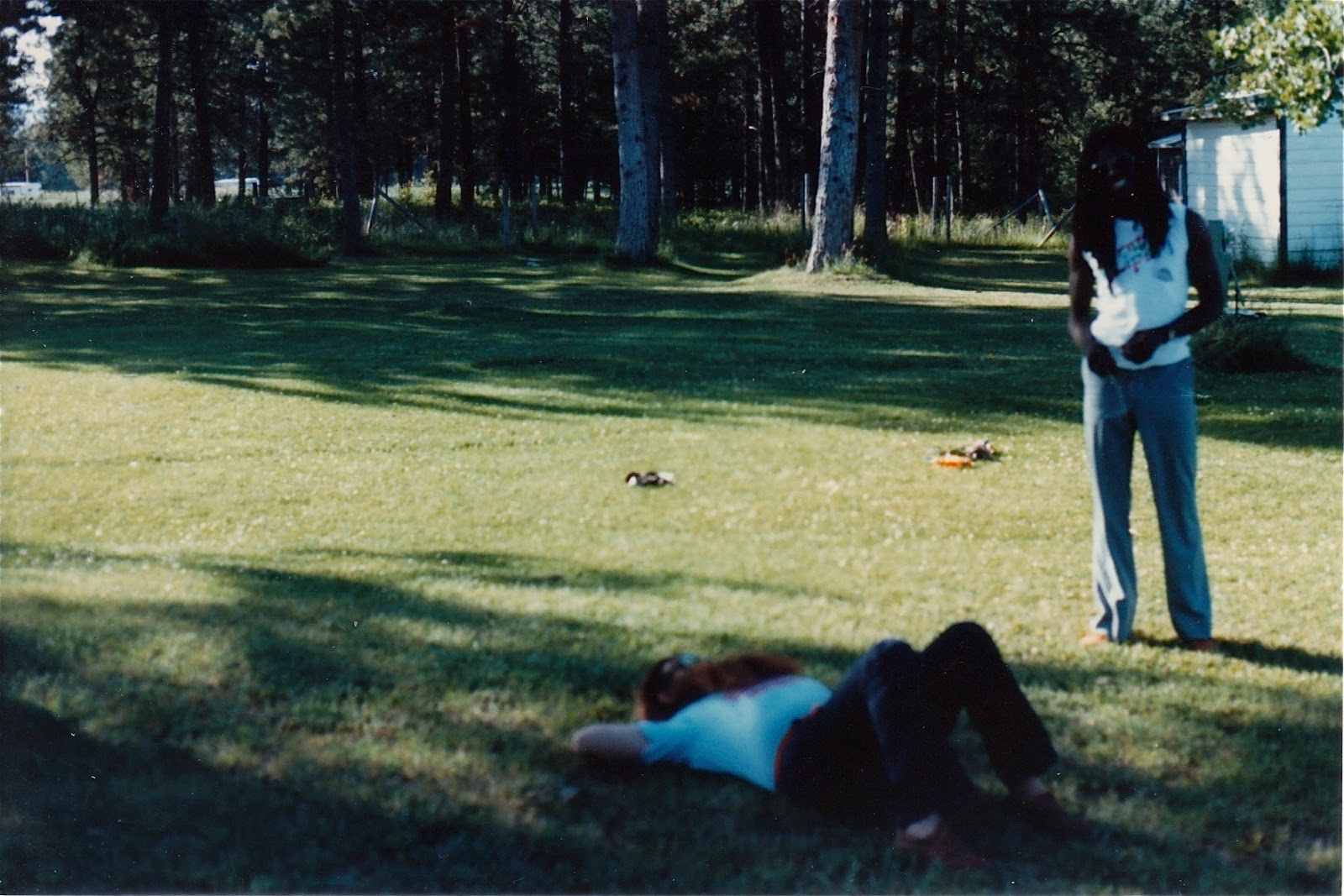

The Mark III was having starter issues, so it was also great weather for crawling under the car. The problem turned out to be a couple of badly corroded cables:


On this trip we took along my favorite travel guitar, a short scale '57 Duo-Sonic, along with a battery operated Pignose amp. One late night, Beaver driving, I-Ron riding shotgun, and me lounging in the Lincoln's huge leather back seat and noodling on the guitar, we were cruising along Interstate 15 between Dillon and the Idaho state line, just about the only car on the road, the full moon lighting up the shining snow capped peaks of the Bitterroot Range (the next photo shows the Bitterroots in daytime).


Remembering what Beaver had said last road trip, I was chunking the top four strings of alternating Am and G chords in a reggae style backbeat, and singing "You got to keep it rock steady... Keep it rock steady man..." Beaver turned to I-Ron and said "Roll another spliff, mon!" While I-Ron was rolling that spliff, I put what the Beav had just said into the mix; with a couple tokes came inspiration, and I came up with a cool sounding poly-rhythmic riff. After a while that became "Roll another spliff man, I got burnt lips..." And that was a good start on a strange song.

The Burnt Lips band, performing "Burnt Lips" onstage in 2016:


And here's a founding member of the original Burnt Lips group, Jeanne "C.B." Bacon, singing "Burnt Lips" at a house party somewhere in warm and sunny California:


Burnt Lips
Music by James Aoyama-Clifford
Lyrics by James Aoyama-Clifford, Charles Cavanaugh and Fabrice Dolegowski

You got to keep it rock steady, keep it rock steady, man
Keep it rock steady, keep it rock steady, man

Roll another spliff man, I got burnt lips
Put another dub on, we can move hips
Everybody party, doing your own trips
Yeah, yeah, I got burnt lips

There is a conspiracy
It is rules and idiocy
The man with the peaceful herb gets struck down
But the guns and the killing go on and on

Roll another spliff man, I got burnt lips
Put another dub on, we can move hips
Everybody party, doing your own trips
Yeah, yeah, I got burnt lips

The ambassadors from the sky
Have come to get I and I high, yeah
You don't have to ride on no alien spaceships
All you got to do is have burnt lips

Roll another spliff man, I got burnt lips
Put another dub on, we can move hips
Everybody party, doing your own trips
Yeah, yeah, I got burnt lips

Big brother man he say ban the nuclear war
But what you got your hand on that button for?
Keep it rock steady, like a good friend said
We can lose our world, if you lose your head

So, roll another spliff man, I got burnt lips
Put another dub on, we can move hips
Everybody party, doing your own trips
Yeah, yeah, yeah, I got burnt lips

*               *               *

Here's some more photos from those road trips in 1983. The Salmon River, near Challis Idaho:


The Grand Teton Range in Wyoming:


Elk at sundown and bison after dark in Yellowstone National Park:


Was a crime committed while taking this picture? Just asking for a friend:


Two shots of a really interesting home-made contraption on an irrigation ditch line off of the North Fork of the Salmon River in Idaho, not too far south of Lost Trail Pass. As water flows through the sluice gate, it turns the paddle wheel which, through a crank lever, opens and closes that gate. It might have been made to meter a consistent amount of water flowing from the upper ditch into the lower one, or maybe it was a whimsical device built by an inventive farmer:


We stared at it working for over a half hour and debated just what in the heck it did. To get some scale of the size of this gizmo, the paddle wheel is about 18" in diameter; note the wire mesh critter guards to keep squirrels and raccoons off the machinery. On the back side of the mesh guard on the left, there's a couple small white rectangles attached to it - tiny signs that say, in faded red lettering, "Danger!", and "Keep Out". Maybe squirrels in Idaho know how to read:


On the North Fork of the Big Thompson River in Colorado, near home:


*               *               *

Click or tap on any photo above to see larger, higher def images.

Stromberg-Carlson ASR-120 Stereo Tube Amplifier, Pt 1


A few months ago I went to an interesting garage sale in neighboring Springfield. Held literally in a garage, which was the workshop and storage area of a recently passed-away tube amp and speaker enthusiast, the sale was for the benefit of his widow, and the sheer number of older vintage pieces was astounding. I left with a few purchases, which did not include the old tube amplifier pictured above. About a week later a friend, who was also at the sale, called and said he'd picked up two Stromberg-Carlson ASR-120 stereo amps that day, and had the idea of having a co-op tube amp re-build / re-store / re-imagine project. Cool! Count me in, sounds like fun. As long as we're going through a worldwide epidemic disaster, we might as well have some fun while self isolating.

Here's a schematic of the Stromberg-Carlson ASR-120:


Three cropped views of the schematic; first, the audio circuit:


The power supply:


And the resistance test chart:


This is a very straightforward circuit, elegant in its simplicity, and like other classic minimalist tube amplifiers such as the 1950s Dynaco designs, it should end up sounding really great when we get it back up and running well. Just as in Dynaco Stereo 70 and the Mark series amps, each channel's input signal first runs through the pentode 1/2 of a dual section pentode+triode 9-pin tube, in this case a 7199. Configured as an input buffer and low-gain current driver stage, the output of the pentode runs straight into the grid of the triode section of the 7199, which is wired up as a cathodyne phase inverter, the cathode and anode (plate) of which connect up to the grids of their respective 7408 output tubes (an industrial version of a 6V6 GT). Basically, this circuit is very much like a lower power Dyna ST-70, with one difference being that the output tubes of the Stromberg are cathode biased, rather than fixed biased, as in the Dynacos.

A couple more notes:
- The ASR-120 is a power amplifier only, with no controls, and no preamplifier stages - the Stromberg-Carlson console stereos had a separate, remote tuner and control section within another chassis.
- The six tubes in the tuner section had enough combined gain to run its output at near line level, as did the powerful ceramic phonograph cartridges used in the late 1950s and '60s - no preamp was needed.
- The amplifier's power transformer has a separate 6.3VAC heater tap, as well as an additional secondary voltage tap; those, along with one leg of the AC wall voltage, were routed through a 7 pin connector and then to the tuner+control section - a rectifier circuit provided DC voltage for the plates and screen grids of the tuner's tubes, the additional heater tap went to the filaments of those tubes, and the AC line was hooked up to an on/off switch on the control panel.

Here's a link for a full size download of the ASR-120 schematic, courtesy of Audiophool's Made In Rochester site: http://www.audiophool.com/Schem_A/S-C_ASR-120_schem.gif

One of the Stromberg-Carlson console stereos that the ASR-120 amplifiers were used in, an RP-781 "Young American" model:


Obviously designed in the late '50s, back when even common everyday appliances, such as toasters and TVs, had style.

Okay, getting back to the project in hand, both of the ASR-120 chassis we ended up with had been modified by their previous owner, both slightly differently, but judging by the solder work, both done by the same person. Here's another shot of the amp chassis, showing some of the mods done to it:


Two pairs of 3-way binding posts have been added, one on each side of the chassis, connected to the speaker output transformers' secondaries. Ideally, I would have preferred they were both on the same side, to minimize cable clutter, but oh well, the holes have already been drilled, so they'll stay. Originally, the output transformer secondary wires simply hung loose, and ran to the speakers; whoever did this mod routed the secondaries back inside the amp chassis and then soldered them to the back terminals of the binding posts.

Also, RCA type input jacks have been installed in the top corners of the chassis, where there were already holes - one of those holes originally had wires running from the 6.3V filament circuit to a power-on indicator bulb, and the other is a mystery. In the photo above, you can see a smallish brown circular phenolic plug-in thingie - that was the original audio input port from the tuner/control section. Soon, those two added RCA jacks will be removed, and moved together to one of the amp sides; I don't much like the idea of input cables hanging in mid-air. One idea we're considering is to replace the original input jack whatchamacallit thing, with a dual-section 500K audio taper potentiometer wired as an input attenuator, acting as a volume control.

Interestingly, the spell-check in Blogger passed "whatchamacallit", but rejected "potentiometer" and "attenuator".

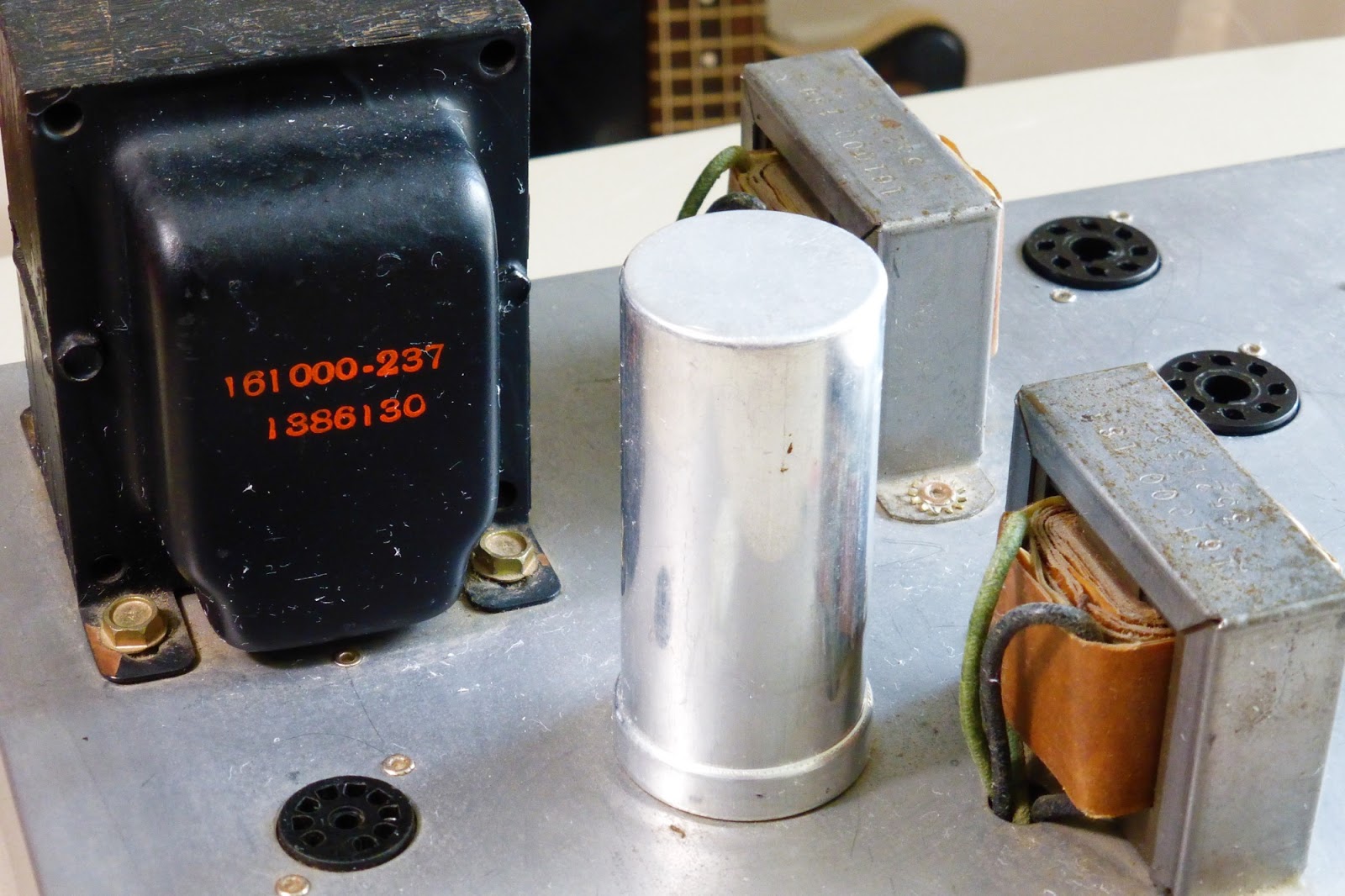
More photos. Here's a shot of the multi-section capacitor can, zeroing in on the manufacturing date code - this cap can was made in the 39th week of 1961:


In this next pic, note the power transformer date code, the 30th week of '61. Hey, I'm beginning to think this amp was made in 1961! Just a wild guess:


One last picture of a manufacturer's date code, stamped onto an output transformer:


Another view of the outside of the chassis, before we dive into the innards. Note the white nylon 7-pin connector that used to carry the three voltages (described a few paragraphs ago) between the amplifier chassis and the tuner + control section. It's doubtful that this amp will ever go back to the glamorous life it enjoyed in the 1960s; that connector, and its associated wiring, will probably be removed:


Next, a photo of the ASR-120's circuitry. In the following two pictures we'll talk about some of what we see here, both what's original and what's been previously modified. In this shot you can see the four rubber feet that were probably added by a former owner, to enable the amp's use as a stand-alone unit; originally, the amplifier was attached firmly to the console cabinet with wood screws:


This next photo shows the power supply wiring: AC line in, power transformer leads, rectifier tube socket terminals, multi-section capacitor can terminals, and associated wiring and other components. Also note the wiring from the terminal strip to the multi-connector, which originally sent supply voltages to the tuner/control unit. The fuse holder, which appears to be glued onto the chassis, has been added within the past 59 years; the original fuse was a pigtail type, soldered directly onto the terminal strip:


One last picture. We're looking at the terminal sides of six tube sockets, the original audio input connector (between the two 7199 tube sockets), and the novel use of a perf board as a tag strip for most of the resistors and capacitors in the circuit. As for what's been added as mods, note the speaker output binding posts, the RCA type audio input jacks, two .1uF DC-blocking caps inline with those input jacks, and two 470K resistors soldered onto the terminals of the original input connector. These 470K resistors, the same value as used in a Dynaco Stereo 70, were added by the previous owner to set the input impedance of the 7199 tubes' pentode sections; originally, the volume control in a Strombarg-Carlson console stereo's tuner/control panel determined that, as well being an input signal attenuator:


*               *               *


Eventually, we're going to do some fun stuff, such as rewiring the 7199 tube sockets to accept other, more readily available (as well as cheaper!) pentode+triode 9-pin tubes, and ripping out some wires and tossing them. After that, we'll pop in some tubes, hook up a couple speakers, and test this little beast.

But first, in Part 2, we'll take a look at the Stromberg-Carlson ASR-120 rebuild done by David from Massachusetts, very nice indeed.

Also, please feel free to get in touch. Being merely a hobbyist, holding no advanced degree in Vintage Tube Ampology, I've no doubt made some dumb assumptions about the circuitry of this amp. Having said that, I'm always willing to learn new stuff, and invite your comments and corrections.

In the meantime, stay safe, stay healthy, and don't hoard toilet paper!


101.8º Fever Two Hour Collage Challenge

"Happy Service Animals"

* Note: The following blog post was written in May of 2019. In it I somewhat humorously describe what at the time felt like a seriously life-threatening experience. However, for many others who came down with that same strain of the influenza virus last year, it was no laughing matter - indeed, between 30,000 and 60,000 in this country alone would never laugh again. This year's new and novel super virus is at this moment hitting the world like a modern-day Black Death plague, and it's all many of us can do on a daily basis to hold off fear and panic, and continue living our lives secure in some knowledge of, and hope for, a happy and productive future. As I write this, on Friday, April 3rd, 2020, our family is getting ready to celebrate the 20th birthday of our shining son, Take-o (nickname Tayo).

About a month ago I came down with a bad case of the deadly Influenza. The same disease that caused so much misery and tragedy in the early 20th Century, depopulating many towns throughout the US, it's still with us today. But now, we know how to deal with it, and very few people ultimately die as a result of contracting the ever mutating virus.

And no, it's not because of the "flu" vaccines that local supermarkets are happy to inject into you. Read the fine print on the label, and hidden in all the legalese jargon, it not so clearly states that the vaccine doesn't actually prevent contracting influenza, the manufacturer never specifically made any claims that it did, and you have no basis for any legal action or recourse whatsoever in case you sicken and die, so go talk to your own personal savior, amen.

What we actually do know now, that we didn't in 1918, is that the most efficacious method of recovery is to stay hydrated, and get plenty of rest in a clean and quiet place. So that's what I did, and it's hard to believe how many hours one can sleep through the course of a day when you have a fever over 101 degrees.

After almost three days of that, I felt well enough to sit at the kitchen table, and have a cup of soothing tea, while looking out at the springtime garden. There was a bundle of mail, and while going through it, a bunch of loose advertisements fell onto the table - stuff from a farm and ranch store, a couple pizza joints, an insurance agency, a store specializing in really crappy quality tools, a mail order cigar shop...

It was all so colorful laying there in a random mess; it was hard to stop staring at that cheerful pile of paper. It's been said that often, the most effective and compelling art is made during states of mental imbalance (or a short lifetime of it, like Van Gogh or Schubert). In my still feverish mind, I thought it would be fun to set myself an art challenge: What can be created from a very limited palette of material, in a very limited time, such as two hours?

I found a pair of scissors, a glue stick, and a sheet of blank printer paper, and got to "work". In spite of my best efforts, including making quick and imprecise cuts, the clock went about five minutes over, by the time the project felt done. So technically, I lost the self imposed challenge, but gained a strange and weird collage. It's the second collage I've done; the first was about a hundred years ago in a college art class. Since it's the product of a feverish (and thus unbalanced) mind, it must be art.

*               *               *

Here's a link to a fine web (and print) magazine devoted to the art of collage: "kolaj". It's made and curated by real collage artists (unlike, let's say, a random half-crazed guy hopped up on chamomile tea), and features the work of today's best and brightest practitioners of the artform.


Restyling an Ugly Epiphone Les Paul Junior / Special, Part 4.5: Odds and Ends


This blog post in the series about the restyling of a really ugly Epiphone Junior / Special, is kind of non informative, just odds and ends of misc stuff, thoughts, and answers to a couple questions. So this installment doesn't even rate its own number in the series, and will be Part 4.5.

The first question might be: why does the guitar only have two skinny strings on it in the photo above? Honestly, I don't remember; but if I had to guess, I'd say I was in the middle of wiring up a new pickup, and put on a couple old strings to check the phase when both pickups were switched on. Or maybe I was tweaking the bolt-on neck alignment: put on a couple strings, loosen up the neck screws just enough to grab the neck and pull it into the proper alignment, and then re-tighten the screws.

Another question I've been asked is - why do I call this guitar a "Junior - Special", when it's actually a "Special II" model? Well, to me, this Ugly Epi doesn't feel like a Les Paul Special. I have an older Gibson Les Paul Special, it's technically a "55-77" model, and its design is based on a 1950s TV Special, "TV" meaning it's got a limed mahogany finish. Regular readers of this blog might know that my old Special has made occasional appearances, although so far it's not had a starring role:


Although it was made in the 1970s, and not the '50s, it's still a "real" Les Paul Special - it has a one piece 1 3/4" thick solid mahogany unbound body, flat top, no arched maple body cap, bound fingerboard, two pickups.

These days, Gibson has a dizzying array of different models of Les Paul, but not too long ago, there were only four: Custom, Deluxe, Special, and Junior. The Custom and the Deluxe were very nice and often beautiful examples of peak wood butcher's art, assembled and finished with great care. The Special was somewhat less so, with simplified appointments and features, and the Junior was a bare bones entry level stripped down hot rod, although still made with good attention to detail. The Junior had a lighter weight, slimmer 1 1/2" thick body, no fretboard binding, and a single pickup.

So, getting back to the beast in hand, the Epiphone Special II model may have two pickups instead of one, but when you pick it up and close your eyes and play it, it's a lightweight Les Paul Junior, and there's nothing wrong with that, at all.

And if you're wondering why I call this cute little guitar "Ugly", here's a reminder from Part 1:


Here's the Ugly Epi side by side with the '77 Gibson Special:


There are some noticeable differences, besides the Epiphone having a bolt on neck - the Gibson's body is a bit longer, the Epi a bit wider, the Epiphone has better higher fret access, and it's a lot lighter than the Gibson.

Here's an interesting photo:


Yep, a Fender neck fits in the heel pocket just fine. The screws aren't in the same places, but it's a thought for sure. Maybe a cheaper line Squier neck wouldn't feel too bad to make new neck mount screw holes in. And how's the intonation? Check this out:


Remember, most Epiphones have a 24 3/4" scale, and Fenders usually have 25 1/2" scale necks. Maybe not every wraparound bridge would have enough range of adjustment to fit, but this El Cheapo brand Leo Quan ripoff bridge would work. Like most low-end bridges, it may not have the best tone, but oh well.

One nice possible combo would be an Epiphone Junior or Special with the blond-ish yellow finish, paired up with a Squier one-piece maple neck. Anyway, just a random thought.

Ever see a P90 pickup without a cover on? Here ya go:


This sort of reminds me of how some steel guitar pickups look; those are usually 10 pole piece pickups instead of 6, but similar. A nice look would be a cotton string wrap, and wax potted or shellacked. Or, for heaven's sake, put some clothes on that pickup, for shame.

Another view of the really strange "not-wood" material that many, if not most, Epiphones are made of. Very moon-scape:


And lastly, a close up look at one of the fake-o "aged, worn" spots that a previous owner inflicted on the Epi:


Don't know yet what to do about those finish flaws; a new paint job seems excessive on such a low-buck project. In the meantime, I simply ran a large felt tip pen over the blemishes, and from any distance, it isn't noticeable, much.

That's about all the misc thoughts I have about the Ugly Epiphone project tonight; if I think of more, I'll post them here.


*               *               *

To read more about this project, check out the other installments of "Restyling an Ugly Epiphone Les Paul Junior / Special", here: Part 1, Part 2, Part 3, and Part 4.

Click or tap on any photo to access larger, higher def images.

Restyling an Ugly Epiphone Les Paul Junior / Special, Part 4: Done Enough To Jam


In the evolutionary cycle of this Ugly Epiphone Junior / Special, we're almost at the point where it's complete enough to play, take to jams, and figure out what happens next, if anything. Last installment, Part 3, we installed a set of nice high quality Gotoh tuners, really necessary for playability - gotta have strings to play. With strings on, the Ugly Epi looked like this:


The Epi was put in the bare bones wreck of our living room, as a symbol - it was incomplete, and so was the room, while we tore the carpet out (I hate carpet in general, an unsanitary never totally cleanable societal plague), did a couple coats of pure white paint, and put in a wood plank floor - which will be a subject for another blog post. As seen above, the Ugly Paul had new Gotohs, no neck pickup, a Mighty Mite made in Korea P90 bridge pickup (with no cover!), mismatched strap buttons, two pots installed but only the volume wired up, and an original issue Epiphone wraparound tailpiece bridge.

That OEM bridge was a real horror story, and may explain why so many owners of these guitars get rid of them. The guitars, that is. Every time I or anyone else picked the Ugly Epi up, it was out of tune. You could literally tune it 50 times, and it would be all whacked out within ten minutes, every time. Within days, that was replaced with a Mighty Mite tailpiece, another really high quality Korean part:


The MM bridge is twice the weight of the original, and seems to add a lot, tonewise - girthier low twang, clearer high end, and more defined mids. The anchors were replaced as well, and after that, rock solid tuning stability, hooray. And yeah, I know, it's gold plated, doesn't match anything else, but for the time being that's okay. While the strings were off, the P90 got a cover from StewMac to hide its nakedness:


Also from StewMac, a pair of new nickle plated strap buttons, a gold "speed" volume knob, and a Gotoh nickle jack plate to replace the flimsy plastic one:


Next, a neck pickup was put in. Found a good deal on a gen-yoo-wine Fender Telecaster neck pickup on Reverb, and then puzzled out how to put it into a guitar that didn't have anywhere good to put it. The P90 neck pickup rout was a large deep swimming pool, and the WD pickguard was kind of weird - it had the modern 8 body attachment holes, but no mounting holes for a hanging Tele neck pickup. It would have relied on a vintage style screwed down to the body pickup arrangement, and that was a no-go in the deep P90 rout. So two mount holes were penciled in and drilled in the pickguard:


This project was full of "firsts" for me, not being very experienced with guitar hack mods. The only other Parts-O-Casters I've done were fairly easy to do, using parts that were meant to go together. In the background of the picture above, you can see a Bournes pull pot, which ended up doing a couple duties in the Ugly Epi. Here's the neck pickup mounted:


At first, only the volume control was wired up, and that was okay to get started, but with two pickups, there had to be a switch of some sort. I didn't have a three-way, so the pull-pot was put in and wired to kick the neck pickup on, and gradually blend it in with the bridge pickup - only two "switch" positions: bridge only, and neck + bridge, plus variable neck blending tones:


Interesting and different switching scheme, and then a tone pot was added, but still no 3-way switch:


That paper in oil capacitor sounds very decent; I guess the skinny on the .033uF value is it's supposed to sound very like an age drifted Sprague Bumblebee .022uF. Maybe. But still, quite decent tone. Also in the above photo, you can see the strange and crazy "not-wood" this Epi is made from; some sort of wild heat and pressure treated wood by-product creation, that actually has decent tone and stability. It's not the space age body and neck materials that hold Epiphones back (or down), it's the crummy hardware.

Okay, and now a word about "XGP" brand potentiometers. Another house brand at GFS, and the big question is: where do they find all the crappiest crap in the world, to mega hype and sell on their site? And no, I didn't buy these, a friend gave them to me to try out. I sometimes see folks on internet forums gushing about how great their GFS bodies, necks, and pickups are, and it feels like it's some kind of Bizzaro World equivalent of websites devoted to fine dining at McDonalds. And what makes a cheapo part deserve a label like crap? It isn't an unfounded value judgement - how about uneven taper, noisy even when new, and not zero volume in the off position?

The small control cavity originally had mini pots (and will again before we're through), and a previous owner did a creative hack job of enlarging the space enough to fit large pots, and still have mounting edges for the cover.

Well that's about it for now. Here's another view of the pickup and pickguard area:


Most everything "new" in one shot - note two new Gotoh large knurl nickel plated Telecaster dome knobs:


And a picture of the Ugly Epi hanging out with some new friends. Underneath all that junky old stuff, you might catch a glimpse of the newly done plank floor:


So the Ugly Little Epiphone Junior Special is done for the time being, while other things happen around the house and in our lives. But eventually, it's going to get some keeper stuff, like another bridge pickup, a non-gold bridge, a 3-way switch, some decent quality potentiometers, and a nice new faux red tortoise shell pickguard, if we can ever find and hunt down a faux red tortoise.


*               *               *


All photos taken with either a Lumix ZS-25, or a Canon 790IS. Click or tap on any photo above to access larger, higher def images.

Here's a link to Part 4.5 in the series about this Ugly Epiphone Junior Special.