Thrift Store Fun: Vintage 1960 Norelco AD-4877M "Labor of Love"

Wednesday was a dental appointment day in neighboring Springfield, and afterwards we stopped by the St Vincent's thrift store on Q St. There were some interesting Asian ceramic pieces in stock that day, and my eye was caught by a pair of brightly painted home made speaker cabinets.

According to the staff, some idiot removed all the screws holding the back panels on, yet still couldn’t get them off, and then grabbed the burlap grill cloth of one cab and ripped it, just to see what the speaker looked like. Seeing a dual “whizzer” cone, he left in a huff, leaving a bunch of screws laying around.

No doubt due to their appearance, these cabs were priced low, so I took a gamble since I’ve had good luck in the past with brightly painted home brewed cabs built in a certain era. It was obvious to me what they were: a labor of love by a 1950s or ‘60s do-it-yourselfer home handyman with a limited tool selection:
an electric jig saw, drill, screwdriver, caulking gun, pencil and probably a long ruler, were all that was needed to build up these cute yellow cabinets.

Mr Handyman also had a novel solution for framing the grill material; in spite of having few tools to work with, he was an intelligent and most likely a creative sort of person.

One indication that these speaker cabs were valued by the builder was a blue Allied Van Lines sticker on one, showing he thought enough of them to pay to transport them as part of a whole house move, most likely to another region of the country.

Nice heavyweight terminals:

They metered out as okay:

The jerko Vinnie’s customer couldn’t get the backs off because the entire cabinet was caulk sealed. Using a very small pry bar, it came apart easily, with a sharp snap and pop noise as the 60 year old caulking separated.

The cleats were screwed in place:


The builder had totally stuffed every cubic inch of the sealed non- ported cabinet with fibreglass batting. Although not done very often anymore, at the time it was sort of a popular concept in the DIY projects as seen in magazines like Popular Mechanics.

Down at the bottom of all that carcinogenic stew was this:

Cool. The magnet cans look amazing, and the 8" (nominal size) speaker drivers themselves are really heavy.


The cones are in overall excellent shape, except for a small bit of damage to one surround, caused by the Gorilla of St Vincent's. Which sounds like the title of some story by Edgar Allen Poe.


"What a maroon!”, as Bugs Bunny would say. (hint for those not familiar with classic Warner Bros cartoons: Bugs meant to say "moron")

Here’s the label:


An online pdf of a vintage Norelco hi-fi ad shows these AD 4877M drivers as costing $26 apiece back in the day, which is the equivalent of over $600 for the pair in today’s money - no wonder the builder / owner kept them through a long distance move.

In the pre-internet days I'd seen a magazine article mentioning Norelco and Philips Alnico magnet drivers as being well suited for use with flat panel "open baffle" speaker design. Checking online today, it’s hard to say if that was so - one of many things gone down the internet memory hole.

Well, let's see what these Norelco speakers sound like. I hooked up the cabs, one as-is sealed and chock full o’ fibreglass, and the other with no batting and the back removed to approximate an open baffle audio experience, and had a listen to some
pieces on the local classical station, KWAX, and selected tracks from a few of my favorite test CDs:

Sarah Vaughan, "Sarah Vaughan" (1954);  Bill Evans Trio, "Sunday at the Village Vanguard" (1961); Bill Morrisey, "Songs of Mississippi John Hurt" (1999); Modern Jazz Quartet, "Django" (1953-1955); Beach Boys, "Pet Sounds" (1966); Stan Getz and Charlie Byrd, "Jazz Samba" (1962); Dread Zeppelin, "Un-Led-Ed" (1990) - If you haven't yet heard Dread Zeppelin, you're in for a unique listening experience: Led Zeppelin tunes done by an ultra tight rock group in a Reggae style, with vocals by an Elvis impersonator.

Also auditioned were a rare String Quartet in E minor by Giuseppe Verdi (Joe Green!), JS Bach's French Suites played by Andras Schiff, Samuel Barber's Symphony No 1, and one of my all time faves, "Graceful Ghost Rag" by William Bolcom.


Never mind the slightly comical looking cabinets - these are nothing less than the greatest sounding single driver speakers I’ve ever heard, and very efficient - at a guess I’d say at least 25% higher efficiency than the Wolverine 8” loaded (plus 12” woofer) Electro-Voice Leyton speakers I have in the living room. Truly astounding detail - I could hear every nuance of brushes caressing the snare skins on vintage jazz recordings, Sarah Vaughan at conversational volume level sounded like she was right there in the room, the separation of moving harmony lines in the Verdi string quartet was incredibly lifelike, and Carl Wilson's vocal on the Beach Boys Pet Sounds album cut “God Only Knows” was sweeter and more angelic than I’ve ever heard it.

Since Pet Sounds is a mono mix I panned between the two cabs to hear differences in the cabinet configuration, and found the open back cab to be a bit more efficient (louder), and the closed one to have a slightly better low end, but not by very much.

Uh oh, I feel another project coming on. Maybe build a pair of solid pine open back cabinets the same size as these yellow things (external dimensions 13.5" x 19" x 12", 1/2" plywood baffle). Or maybe just keep those funky 1950s labor-of-love cabs just the way they are, enjoy the wonderful sound, and who cares what they look like?



Fourteen Random Photos

Pixie Houses

Here are fourteen randomly selected photos. Taken with a variety of cameras and phones, some are recent, some not so new, and one is quite antique.

In the picture above, we were hoping that some small creatures, whether mythical or actual, would take up residence. Possibly they did, but if so they were invisible except to the mind's eye.

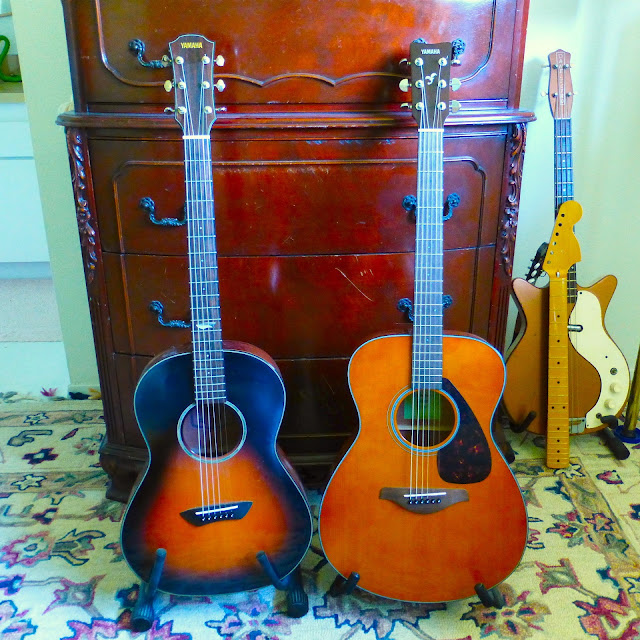
My Two Yams

 Two Yamaha acoustic guitars (CSF-60, FS800T), plus other stuff.

In Studio

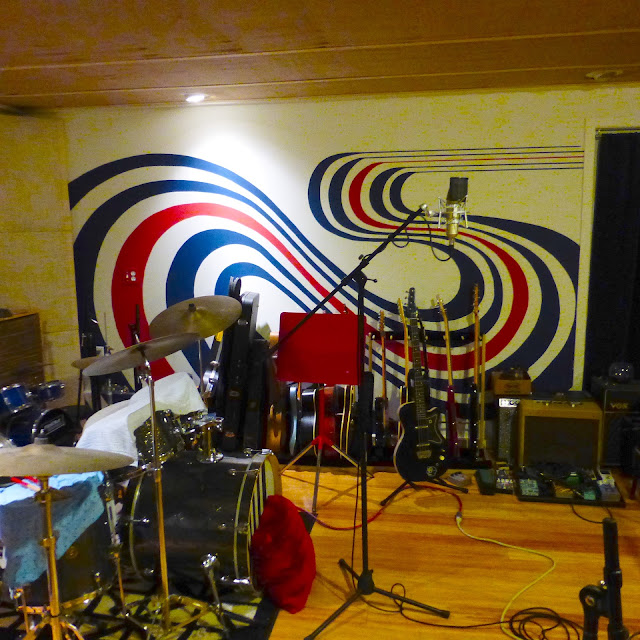
At Kyle's studio, featuring his wall sized homage to Elliot Smith's "Figure 8" album cover. Also semi- hidden but in plain sight is my old Danelectro / Silvertone bass.

Impressionistic Jimmy

A crop of an image posted on this site earlier, "Un Jour à La Pointe de Fermin, 1973". My humble attempt at emulating a painterly impressionist style.

Christmas Deer

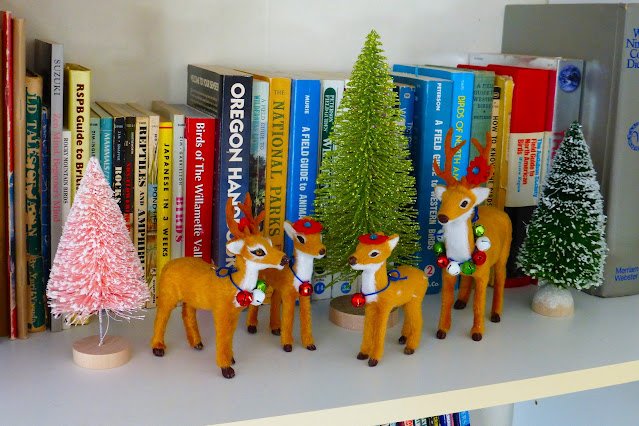
Christmas is a fun time around here. Besides a fully decked out tree, door wreath, and holly draped piano, there are also various decorations throughout the house, including this bookshelf display of tiny deer and bottle brush trees.

Isuzu at the Canoe Launch

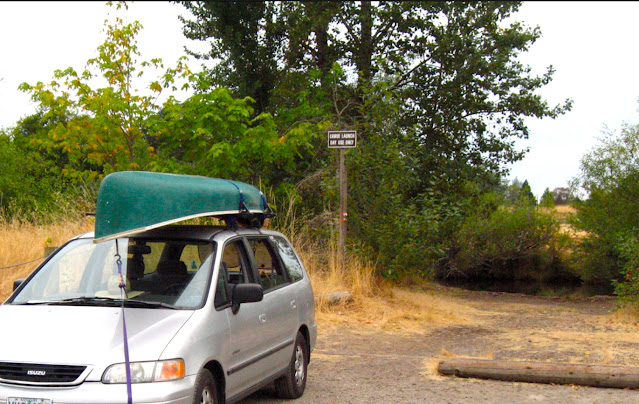
It was a perfect day to go canoeing: warm, light breeze, and mostly overcast, so there was little danger of sunburn. Actually, cloudy is a way of life here in western Oregon.

Almost Perfect Pie

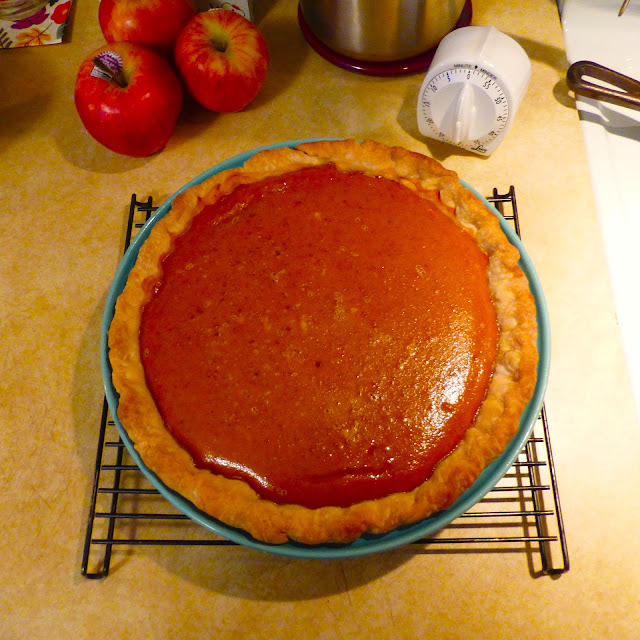
Sometimes a home made pumpkin pie will turn out perfectly, and this is one of those rare and wonderful events. Absolutely a slice of heaven served with freshly whipped cream, subtly flavored with sugar and vanilla.

Aerial Dragonfly

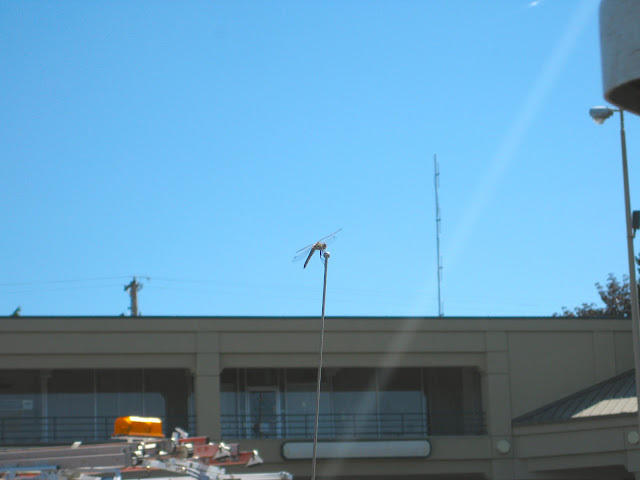
Came out of the neighborhood medium sized supermarket, and found this amazingly calm dragonfly perched atop the radio antenna. It stayed on the aerial for about two blocks of slow driving, before it flew off to fulfill its destiny.

Eugene Toy & Guitar

With no logo decal, the headstock on the long-term project Strat Parts-O-Caster has been looking sort of barren since the new one-piece FujiGen maple neck was installed. A sticker from the Eugene Toy & Hobby store might just be the answer.

Chops in the Wild

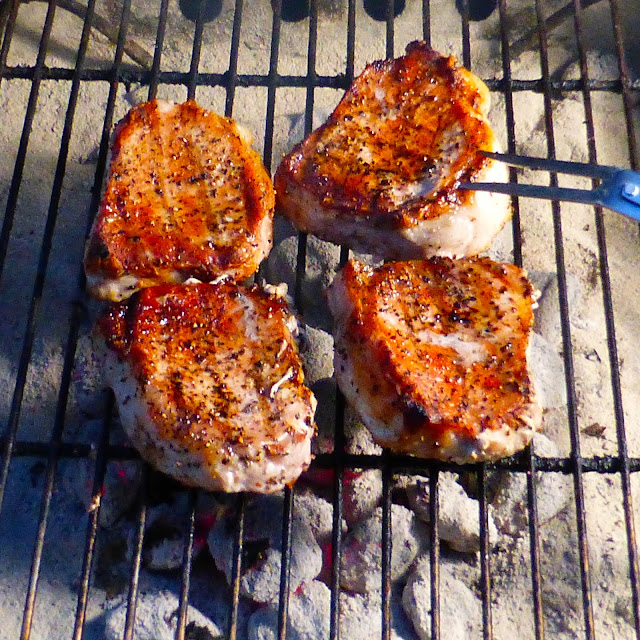
Taking a portable charcoal grill along when car- camping at campgrounds in National Forests and Parks can be a delicious thing. Thick burger-sized chops perfectly done, served on buns with barbecue sauce, Joe's dipper corn chips and guacamole, a fruit bowl at hand, and beer or lemonade. Life is good.

And please don't come at me about the state of the grill. Exactly what part of "Camping Barbecue Grill" don't you understand?

Matryoshka Amplifier

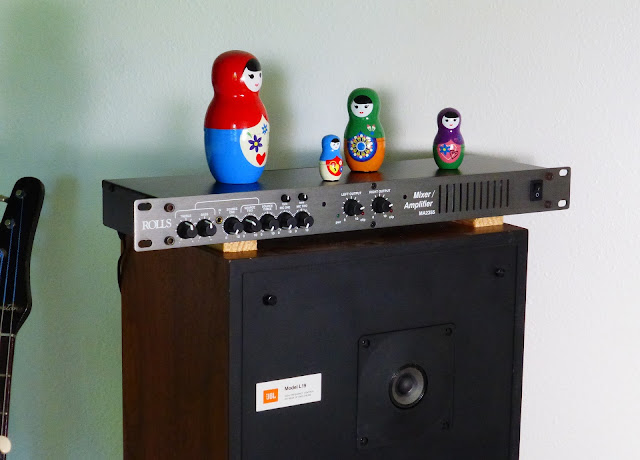
These nesting Matryoshka dolls were a gift, and a great place to display them is on top of the amplifier that drives a pair of 1970s JBL audio monitors. Every time I sit down to do some editing, they make me smile.

Beat Up Altec

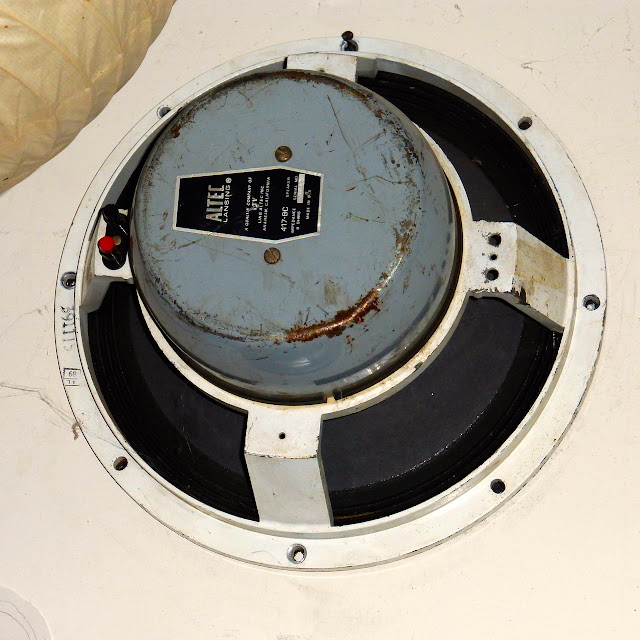
You might ask- how on earth does a speaker get so beat up? This Altec 417-8C was a brand shiny new gift when I first got it, but that didn't last long. Always installed in various Fender tube combo amplifiers, usually one of my mid-60s Deluxe Reverbs, it saw constant gigging duty.

After a show, often a one-nighter many miles of bad roads from home, we would toss equally beat up effects pedals, cables, and a Shure 545 mic into the back of an amp, and then chuck the whole thing into a car trunk or pickup bed. The bottom line was: whatever didn't survive that experience wasn't worth keeping.

Spirit Lanterns

We like to have fun on the holidays. Okay, Halloween isn't really an official holiday, and in recent years the Lizard People have tried hard to kill it, but this Pagan rite still survives. Great family fun is having everyone create their own pumpkin jack-o-lanterns.

Good Night

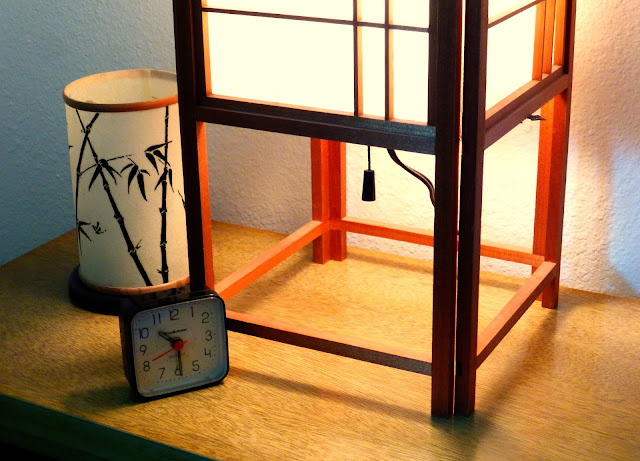
The last thing I see before switching off the wood and paper night lamp. Good night!


Jonsan's Bridgestone XO-1 Build

Here's a special treat, another beautiful bike build from my younger, smarter brother, Jonsan. In an earlier guest blogpost from him, about his then- latest project, a Gazelle "Crossframe" cyclocross bicycle, I wrote this:

"My brother Jonsan has always had some cool and interesting bicycles, including the very first fixed gear bike I'd ever seen, a mid-80s Schwinn Madison (which now lives in my garage, and sometimes roams the streets of Eugene). He'll find a rare and/or beautiful frame and then build it up with top quality components, and every once in a while he sends me photos of his incredible creations." And now, without further ado, here, in his own words, is Jonsan:

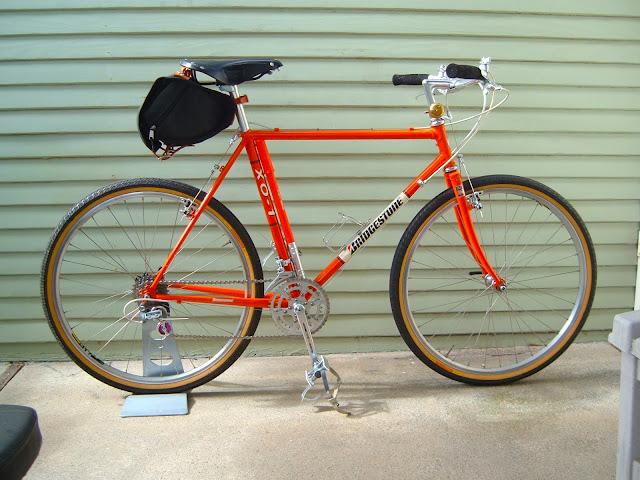
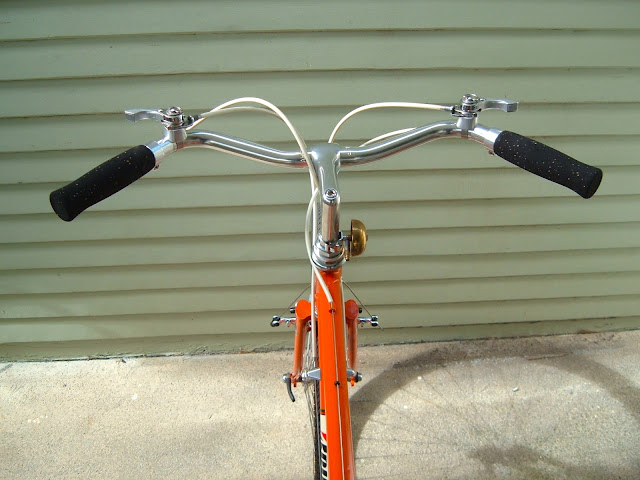
For approximately a decade I have been wanting to find a 1993 Bridgestone XO-1. Among its unique features was a frame built with standard road tubing but sized for 26” wheels and the very unique moustache handlebar. While it originally came with 1.25” (32mm) tires which were considered wide-ish for the day it had clearance for much wider tires, a precursor to how the now popular “gravel” bikes are equipped. According the the 1993 Bridgestone catalog, only 1000 were made and my understanding is that they weren’t too popular and lots were leftover when they were discontinued the following year. I had a 1992 model which had similar specs but different colors for the frame and sidepull brakes but the 1993 which had an orange ("Construction Pumpkin” in the catalog) frame and cantilever brakes is the most desirable one to own.


I found this in the local craigslist as a frameset only. It was in very nice shape for a frame that is close to 30 years old, so it appears to have not been ridden much. The gentleman who sold it is a big Bridgestone XO and Rivendell fan. He bought it knowing he was too tall for it hoping to trade it for a larger frame which didn’t materialize so he decided to sell. It wasn’t cheap (don’t ask) but it was priced several hundred dollars less than complete bikes go for, which is $$ saved for me as I had a specific build I wanted to do that didn’t include any of the original parts anyway.

All of the parts were already on hand to assemble the bike so no trips to the local bike shop or online purchases were necessary. The bottom bracket wasn’t the right length for the crankset I used and when I removed it the whole works were covered in metal shavings. I could still see paint on the outside edges of the bottom bracket shell so presumably the frame was prepped at the factory and then painted without cleaning up the mess beforehand! The headset felt a bit gritty to me so I disassembled it to regrease and adjust, and it was similarly full of shavings. Except for the headset cups (I did replace the bearings and their captive holders as I was too lazy to soak and clean the shaving encrusted moving bits) no other component is original to the bike.

The bars and stem are set up for an in-between riding position, not leaning too forward or too upright, which I think suits the bike well. It climbs and accelerates good but not great, partly due to how my body is positioned and the rather pedestrian tires it is currently shod with. It does have a great ride quality and I love the way it looks, so I'm sure it'll be one of the last bikes I would ever part with.

Here's a build component list for those interested. I may make some changes along the way but I am in no rush to do so. Ignore the long-ish cable ends hanging out - I usually go for several rides to make sure everything is adjusted properly before I trim and attach the end cap thingies:

• Panaracer Pasela 26x1.75 (42mm) tires

• NOS Suntour XC Pro hubs laced with Sapim butted spokes to Mavic 317 rims by Ryan Mason of Mason Cyclewerks who sadly (for me) moved from Long Beach to northern Cal so I gotta find another wheel builder.

• Nitto "Young" (I think) stem

• Ahearne/MAP handlebars, made and sold by Joseph Ahearne and Mitch Pryor, a couple of custom frame builders. Pretty much a copy of the Cinelli "Priest" bars but with a 25.4 clamp diameter and a 22.2mm grip diameter and quite a bit heavier too. Also similar to the Nitto 2522 “Jitensha” handlebar except for a 1” rise instead of being flat.

• Velo Orange cork/rubber grips

• Real Design brake levers

• Suntour LD-2800 thumb shifters

• American Classic 27.0mm seatpost

• Brooks B17 saddle

• Campagnolo cantilever brakes - OK, these are actually made by Tektro presumably in Taiwan but I like ‘em and they are way easier to adjust than the older post style cantis 

• TA Cyclotouriste crankset, 42/32 chainrings

• MKS touring lite pedals with MKS alloy toe clips

• Sachs 13-26 7 speed freewheel

• Suntour ARX front derailleur

• Suntour Sprint 9000 rear derailleur with Bullseye pulleys

• Nitto touring bottle cage

• Silca framefit pump

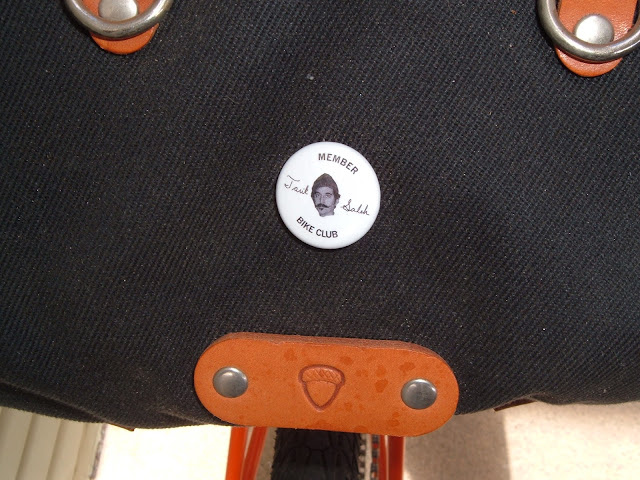
Acorn M/L saddlebag - Acorn bags are made here locally in Gardena by a husband and wife team who makes a batch of bags each month and posts them for sale on their website and sell out in a few minutes. My saddlebag fetish is due to influence from my older brother; all of my bikes have a bag, each with a Tarik Saleh Bike Club button attached. There are 2 club rules: "Ride bikes" and "Try not to be an ass":


 *                    *                    *
 
Editor's note: Another classic bicycle from the 1990s that had a similar design ethic and geometry as the Bridgestone X0-1 was the economy level B-Stone CB-0.
 
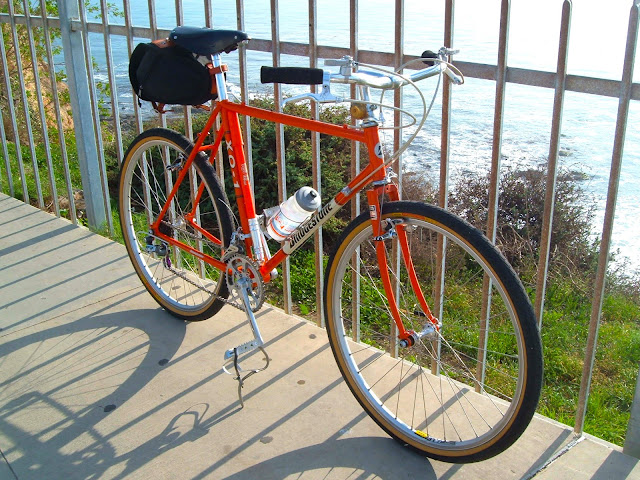
The first and last photos above of Jonsan's XO-1 show it parked at the edge of the known world - at the sudden, cut-off southern end of Pacific Ave in San Pedro, where the rest of the street had fallen down the cliff towards the Pacific Ocean in the semi-major earthquake of 1933.
 
Beyond the fence is an area that's always been known since the quake by San Pedrans, unofficially, as the "Sunken City". As late as the 1970s there were still recognizable remnants of the houses and shops that once lined that scenic seaside drive, but those ruins, now almost a century old, have become less visible as the years pass by and the soft sandstone cliff continues to crumble slowly into the sea.


Foo Pup

We've been trying to figure out what this. It's cast ceramic, and the glaze appears to be in the deliberately imperfect Japanese style known as Wabi Sabi. And it certainly is cute ("Kawaii"), so that also suggests that it was made in Japan, whatever it is.

I'm going to make a wild and completely non-academic guess, based on no evidence at all: this piece of ceramic art is a young, immature version of what is commonly called a Foo (or Fu) Dog, also known as a Guardian Lion in China.

Here's a large and apparently grown up Foo Dog / Lion guarding the main entrance to a fairly big house or possibly a temple:

A much smaller white Foo stands guard atop our piano:

No doubt that when they get older, Foos become fiercer and even scary looking, and that's probably a large part of their appeal as spiritual guardians of the material world. But I'd be just as happy if our little Foo Pup never grows up, and stays as cute as he or she is today.

Here are a couple more photos of the Foo Pup:


Saab-u, Snow Car of the North

It snowed here on Christmas day, almost a foot falling over 24 hours. This was an increasingly rare event for the southern end of the Willamette valley in Oregon; the last time we had any real snow was three winters ago. Last year, there wasn't even a hint of snow, and the year before that there were a few flurries but nothing stuck. With very little real wintery weather here, we've never felt a need to have an all wheel drive car. For the few days when the roads are rough going, it's a good excuse to just stay home and enjoy the hot cocoa, rather than be out on the streets rubbing elbows and smashing fenders with the teeming masses.

To the right in the picture above, you can see the beginning of digging our car out for a grocery run on the morning of the 27th. By the second day after the holiday, our food stock was down to stockings full of chocolate, crusty ends of snack sausage and questionable cheese, horrid glazed popcorn finger food, and worst of all, no beer.

Back when we lived in Montana, Minnesota, and Illinois, digging cars out from under a pile of snow was a real chore. In Colorado and northern New Mexico it was a job not needed very often, and here in western Oregon, it's actually fun.

Here's the car, a 1996 Saab 900SE, after we got back from a short but complete shopping trip (Trader Joe's, The Kiva, and the neighborhood Safeway). By that time the beautiful sunshine had gone, replaced by the usual dreary cloudy ick, and threatening to rain.

In fact that's what it did, and after a day of that, almost all of the clean fluffy white snow was melted, leaving only a few dirty piles here and there, left over from plowing and shoveling.

Now, let's talk about why we renamed this car "Saab-u, Snow Car of the North":

We never thought our '96 Saab was going to be very driveable in winter weather. Although it's true that it was designed and built in Sverige (Sweden), by actual Swedes who should know a thing or two about long and snowy winters, this particular Saab was the "sporty" model for that year. Stanced lower than the regular 900 line, with very little ground clearance, and shod with wide low profile tires on rims too wide to fit any reasonably narrow tires for good traction, it was made for flinging around curves at speed, not for any sure-footedness on snow and ice.

Our usual get-around grocery, kid and canoe hauler, a made in Nihon (Japan) Isuzu Oasis - a re-badged 1st Gen Honda Odyssey - was stuck in the steep driveway with tired 3 year old tires (shown here alongside the lovely McKenzie River, when the rubber was new):

The Saab's skins are nearly new, so we decided to dig the 900SE out and see how it did in snow, although we didn't expect much from it. Surprisingly, in spite of being the "wrong" car for the job, it did amazingly well - it smoothly got out onto the slippery street and down the hill to town with a minimum of wiggle and drift, and just generally behaved itself. Coming back, the Saab marched up the snow packed and ice-glazed hilly streets of our part of town, with no problems or odd handling at all, then backed into its parking spot and sat there (I think) with a satisfied grin on its cute face.

This should not have been the surprise that it was. After all, this model of Saab was one of the last "real" made in wintry Sweden Saabs to be designed and built prior to General Motors getting its filthy hands on the company and eventually driving it into bankruptcy - not before foisting some really horrible cars on an unsuspecting public, such as rebranded Saturns. The Saab "9-2" model, basically a re-badged Subaru WRX, wasn't bad at all, but by then it was too late, and yet another limited production maker of interesting, innovative, and practical cars ceased production.

Here's a "real" Saab:

A 1984 Saab 900 Turbo, it's the only car I've really regretted selling. Almost perfectly engineered in every way, fast and stable, easy and fun to drive, with sensible 15" wheels that easily fit narrow 185/65x15 tires for great traction in snow rain or sunshine, and able to haul an incredible payload under its well designed rear 3rd door. And no, that's not a "hatchback"; those that know classic Saabs call it a 3rd or 5th door, since it goes all the way down to the top of the rear bumper, creating an easy to get into and out, flat load floor.

At the time we had one too many cars, and we let this Saab go. The guy I sold it to promised to love it forever, but within a couple years he, like GM, drove the Saab 900T literally into the ground. It's now sitting in the weeds, defaulted, at a Saab mechanic's lot in Jefferson Oregon, with peeling paint, ruined interior, and unknown mechanical problems and uncertain title status. Very sad to see an old friend fallen upon hard times.

We kept this made in Bayern (Bavaria) 1975 BMW 325:

A real tiny terror, with a fairly large straight six somehow shoe-horned into the smallish engine compartment, it was also very fun to drive, and almost trouble free for the time we had it. But it was not a snow car; whenever we took it out in winter weather it would, like a cat, stop every now and then and shake its paws and whine. Not very confidence inspiring. When the 325 got to a certain age and mileage we replaced it with the '96 Saab 900SE.

Now that we know what a competent snow car Saab-u is, we'll be looking around for a set of narrower 15" rims, and replace the "performance" wide profile 16" tires with some sensible shoes. And look forward to the next time it snows here, maybe in 2 or 3 years.

Here's a couple more shots of Saab-u:


Ongoing Strat Partscaster Project, Part 5: A New Neck

This Parts-O-Caster project was started about seven years ago when I bought a 1991 MIM Strat from friend David, who had saved it from an early death and did a major overhaul on it. It was a fine playing and great sounding Stratocaster, but I couldn't resist messing with it, and over time, bit by bit, every component has been replaced. A few weeks ago the really nicely set up and slim '91 rosewood fingerboard neck was taken off and a new girthy Allparts one piece maple neck took its place. At this point it feels like a done project, with no foreseeable changes in the near future. With zero parts left of that original Strat, it's mission accomplished - I've totally messed it up.

Here's a quick parts rundown:
• 1995 Fender Japan '57 Reissue Series (made by FugiGen) alder body and neck plate
• 2020 FugiGen made Allparts nitro finished neck w/ a substantial .92" to .97" V profile and 7.25" radius fretboard
• USA Fender gold anodized aluminum pickguard loaded w/ Squier Classic Vibe Duo-Sonic alnico magnet pickups - all of which are around 6K in DC resistance, one 500K CTS volume pot and one 250K Bourne tone pot (the Bourne is also a "neck pickup on" pull switch), Sprague Bumblebee .02uF capacitor, and Oak Grigsby 3-way switch
• Gotoh trem bridge w/ zinc block and '70s style Allparts cast saddles
• Gotoh vintage style tuners, jack boat, and strap buttons
• and a Fender vintage style round string guide which hasn't been installed yet

If you're wondering about some of the unusual parts choices, I'll just say I've never been a fan of the typical "thin" Strat tone, and the resultant sum-total sound of this odd combination of components is anything but thin and zingy. In fact, even the in-between switch settings have no trace of "quack" factor.

There's still some stuff needing doing, such as a fret level and recrown, and eventually replacing the nut, which is currently an experimental zero-fret conversion thing which will probably never work correctly. Besides that, the Partsocaster sounds as great as it always has, and I'm really enjoying squeezing notes out of the hefty "V" neck. One former issue, a tendency for notes played on the high E string to be slightly dull sounding, has gone away with the addition of the one-piece maple neck. I always wondered - was it the bridge or the neck that was causing that? Now I know.

Since the vintage-spec Allparts neck has the truss rod nut mounted at the heel of the neck, I put a notch in the body to make any adjustments a bit easier. This mod works best with a Telecaster with a body-mounted neck pickup - all you have to do is remove the pickguard, and the adjuster nut is easily accessible. On a Strat, with all three pickups mounted on the 'guard, it's not so convenient - the real reason I added the notch was so the guitar could be strung up and played for a week or so without a pickguard, until the brand new neck had settled in place, and then adjust as needed before finally installing the 'guard.

First, some cuts with a fine tooth hobby saw:

Next, knocking out wood between the cuts:

The resultant notch is a bit rough looking. If this was done for someone else, I would have cleaned it up nice and purty, but it's my guitar and I don't care if I want to:

Now it's easy to get a screwdriver in there:

Or a StewMac truss crank:

Next is a shot taken just after the mounting holes had been drilled into the heel of the new Allparts neck. With a drill guide, getting the holes drilled nice and perpendicular was easy. For a mounting screw hole pattern I used the the traditional Fender factory specification, which also says that all necks should have the holes in the same locations - that simplifies mating of neck to body, and allows for easier neck substitutions, often not possible with the modern revisionist custom hole drilling. Warmoth also uses the old style neck mount hole placement on their necks.

Placing the mounting screws, well lubricated with old fashioned Kirk's Castile Soap, through the neck plate and then through the four holes in the body's neck pocket, there was no "seeking" or uncertainty. All four screws (many of you call them "bolts", but screws they are) went quickly and precisely into their respective pilot holes in the neck heel, and tightening was a breeze.

With the neck attached, here's what it looks like with the pickguard placed back down:

As you can see, the truss rod nut is just barely not accessible; many older Fenders had a semi-circular notch cut out of the pickguard to allow a screwdriver to get in there, and I'm thinking I'll do the same eventually. That all depends on how much this neck does the seasonal warp thing - somehow I have a feeling it won't move much, it's a fairly hefty chunk of maple.

A comparatively rare neck plate, found only on certain Japanese production Fenders, and on no USA or Mexico models:

The Strat after mounting the new Allparts neck:

Except for some minor fret work, this guitar is done, and it's time to focus on building up a big-neck Telecaster project. Most of the parts for that have been collected, including a precision cut knotty pine body from ToneBomb in Calgary Alberta, and another FugiGen Allparts neck, this time an unfinished one to match the body. If I don't end up totally messing that project up, there will be photos and misc ramblings posted here at Origami Night Lamp. Or who knows, I might just document the disaster.

*               *               *

Here are links to previous posts about this Parts-O-Caster project:

Part 1

Part 2

Part 3

Part 4


Eugene Sign Haiku Pt 4: "Doggy Styles" Pet Grooming Shop, N Hwy 99


Turn around and smile

As I'm up on two hind legs

It's love, Doggy Styles!

*               *               * 

For more Eugene Sign Haiku:

Part 1

Part 2

Part 3


How to Be a Bass Player

The above illustration by a genius artist named Hopkins, clipped out of an old issue of Musician magazine, has been inside my bass case, underneath either a 1962 Precision or a '61 Danelectro, for a long time now. Every time I see it, unpacking before a gig or a jam, it makes me smile. It's a three-second bass lesson, an inspiration and affirmation, and a quick reminder of what's important no matter what kind of music you play: who you are, why you're there, what it is that you want to happen.

1) Jazz. Ron Carter, Charlie Hayden, Charles Mingus, Scott LaFaro... Listen to jazz combos, especially trios - the bass not only holds the root down through the changes, but sets the mood and direction of both the song, and the band. A well played bass line is the living breathing bridge between the rhythmic (Yang) and the melodious (Yin).

2) A quake, a seismic deep rumbling disturbance, a rift opening upon the earth's crust. It's the groove, man: deep, wide and pulsating-- dance as close as you can on the edge without falling in. It's within the power of your fingers to excite the rhythmic beast and bring down the house, or lay back and float after the eruption, on a mellow stream of cool vibrations.

3) Shake that booty. What else needs to be said? Shake it baby, shake it. Shake it all night long.